From Ruins to Innovation: South Korea’s 50-Year Transformation
Half a century ago, South Korea was a nation struggling to rebuild after war, with limited natural resources and widespread poverty. Today, it stands as one of the most advanced economies in the world—home to cutting-edge technology, global brands, and a highly skilled population. This remarkable journey, often referred to as the “Miracle on the Han River,” is not just a story of economic growth but of vision, discipline, and strategic transformation.
A Nation That Chose Industry Over Limitation
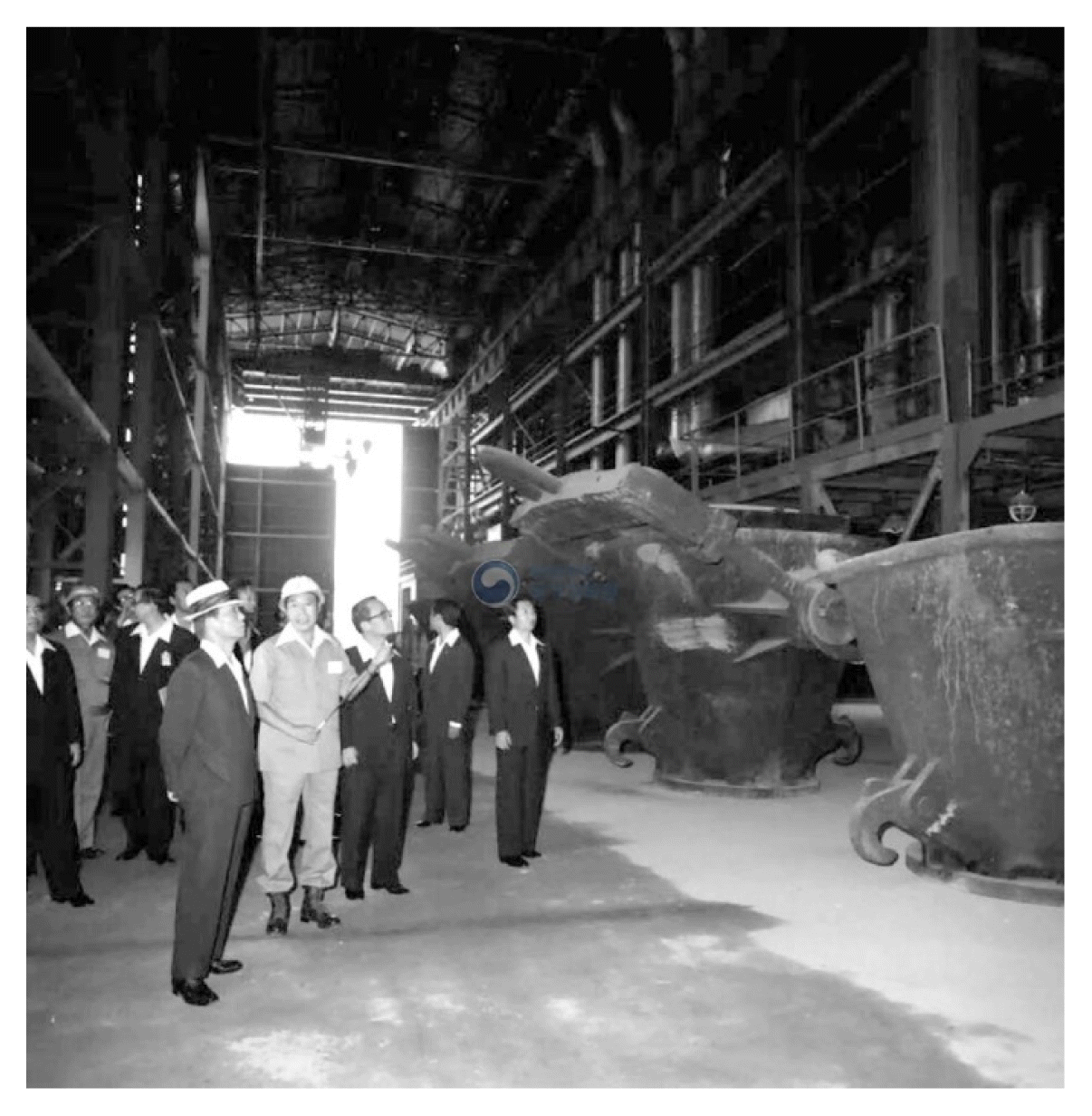
In the 1970s, South Korea made a decisive choice: it would not remain dependent on agriculture or foreign aid. Instead, it embraced industrialization with strong government direction. Policies were not left to chance. The state identified key sectors—steel, shipbuilding, automobiles—and invested heavily in them.
Large conglomerates, or chaebols, became the engines of this transformation. Companies like Samsung and Hyundai were nurtured with access to credit, incentives, and policy support. These firms did not just grow—they expanded aggressively into global markets, turning South Korea into an export-driven economy.
Infrastructure development followed closely. Ports, highways, and power systems were built at scale, ensuring that production could meet global demand efficiently. At the same time, education was prioritized, creating a workforce capable of supporting industrial growth.
Learning Through Crisis, Growing Through Reform
No development journey is without setbacks. For South Korea, the 1997 Asian Financial Crisis was a defining moment. The crisis exposed structural weaknesses—high corporate debt, lack of transparency, and fragile financial systems.
Yet, what distinguishes South Korea is how it responded. Rather than resisting change, it embraced reform. Financial systems were strengthened, corporate governance improved, and the economy opened further to global competition. These changes were not easy, but they made the system more resilient and efficient.
The crisis, in many ways, became a turning point. It forced South Korea to transition from rapid expansion to sustainable, innovation-driven growth.
The Leap Into Technology
Entering the 21st century, South Korea shifted its focus from heavy industries to high technology. This was not a sudden change but a strategic evolution. Investments in research and development increased significantly, placing the country among the global leaders in innovation spending.
Companies like Samsung Electronics and SK Hynix became global giants in semiconductors, smartphones, and electronics. These were not just successful businesses—they represented South Korea’s ability to compete at the highest technological level.
Equally important was the country’s digital infrastructure. South Korea built one of the fastest and most reliable internet networks in the world. This enabled the growth of digital industries, from gaming to e-commerce, and positioned the country at the forefront of the digital economy.
Innovation as a Way of Life
Today, South Korea is not just an industrial or technological power—it is an innovation ecosystem. From artificial intelligence to robotics, from electric vehicles to 5G communication, the country continues to invest in the future.
But innovation in South Korea is not limited to technology alone. Cultural industries—music, cinema, and media—have become global phenomena, contributing both economically and socially. The rise of Korean content worldwide reflects a broader strategy: combining technology, creativity, and global outreach.
What Powered This Transformation?
South Korea’s success did not happen by chance. Several underlying forces shaped its journey.
A strong and proactive government played a crucial role in the early stages, guiding industrial policy and supporting key sectors. However, this was balanced by a gradual shift toward market-driven growth and global integration.
Education became the backbone of development. A consistent focus on literacy, higher education, and technical skills ensured that the workforce could adapt to changing economic needs.
Equally important was the emphasis on exports. By producing for global markets, South Korea scaled its industries, earned foreign exchange, and built international competitiveness.
The role of large corporations cannot be overlooked. While the chaebol system has its criticisms, it enabled rapid industrial expansion and technological advancement at a scale that smaller firms could not achieve alone.
The Speed of Growth: Why So Fast?
What makes South Korea’s story particularly striking is the speed of its transformation. In just a few decades, it moved from low-income to high-income status.
This rapid growth can be attributed to clarity of vision and consistency in execution. Policies were not frequently reversed; instead, they were refined and strengthened over time. High savings and investment rates provided the capital needed for expansion. At the same time, the country remained open to learning—adopting foreign technologies and improving upon them.
There was also a strong societal commitment to progress. Long working hours, discipline, and a collective focus on national development created an environment where growth was not just a policy goal but a shared mission.
The Payoff: A High-Income, High-Tech Society
The results of this transformation are evident today. South Korea enjoys high income levels, advanced infrastructure, and a strong global presence. Its companies are household names worldwide, and its products—from smartphones to automobiles—are synonymous with quality and innovation.
The country also benefits from high human development indicators. Education, healthcare, and quality of life have improved significantly, making it one of the most developed societies in Asia.
A Brief Look at India
Comparing South Korea with India provides an interesting perspective.
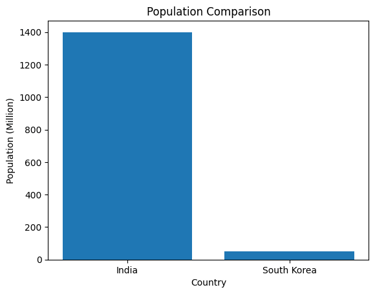
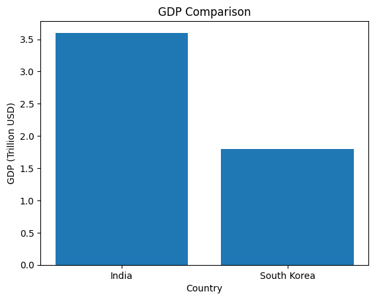
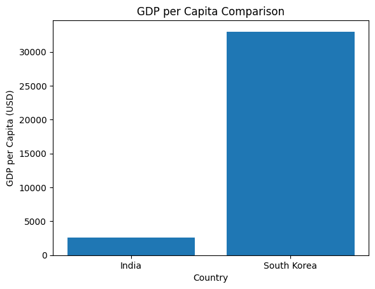
India’s economy, at around $3.5 trillion, is larger than South Korea’s due to its vast population of over 1.4 billion people. South Korea, with a population of about 52 million, has a smaller total economy but a much higher income per person—over $30,000 compared to India’s roughly $2,500.
In terms of land area, India is nearly 33 times larger than South Korea. Yet, despite its smaller size, South Korea has achieved a higher level of industrialization and technological advancement.
This contrast highlights an important insight: economic success is not determined by size alone but by how effectively resources, policies, and human capital are utilized.
Lessons From South Korea’s Journey
South Korea’s experience offers valuable lessons for countries seeking development. It demonstrates the importance of long-term planning, investment in education, and openness to global markets. It also shows that crises, if managed well, can become opportunities for reform and growth.
Perhaps the most important lesson is the role of adaptability. South Korea did not remain fixed in one model of development. It evolved—from agriculture to industry, from industry to technology, and now toward innovation and sustainability.
Closing Thoughts
The story of South Korea is ultimately a story of transformation—of how a nation with limited resources can achieve extraordinary success through vision, discipline, and continuous learning. It reminds us that development is not just about economic numbers but about building systems that enable people, industries, and ideas to grow.
As the world moves toward a future shaped by technology and sustainability, South Korea’s journey stands as both an inspiration and a blueprint for what is possible.